
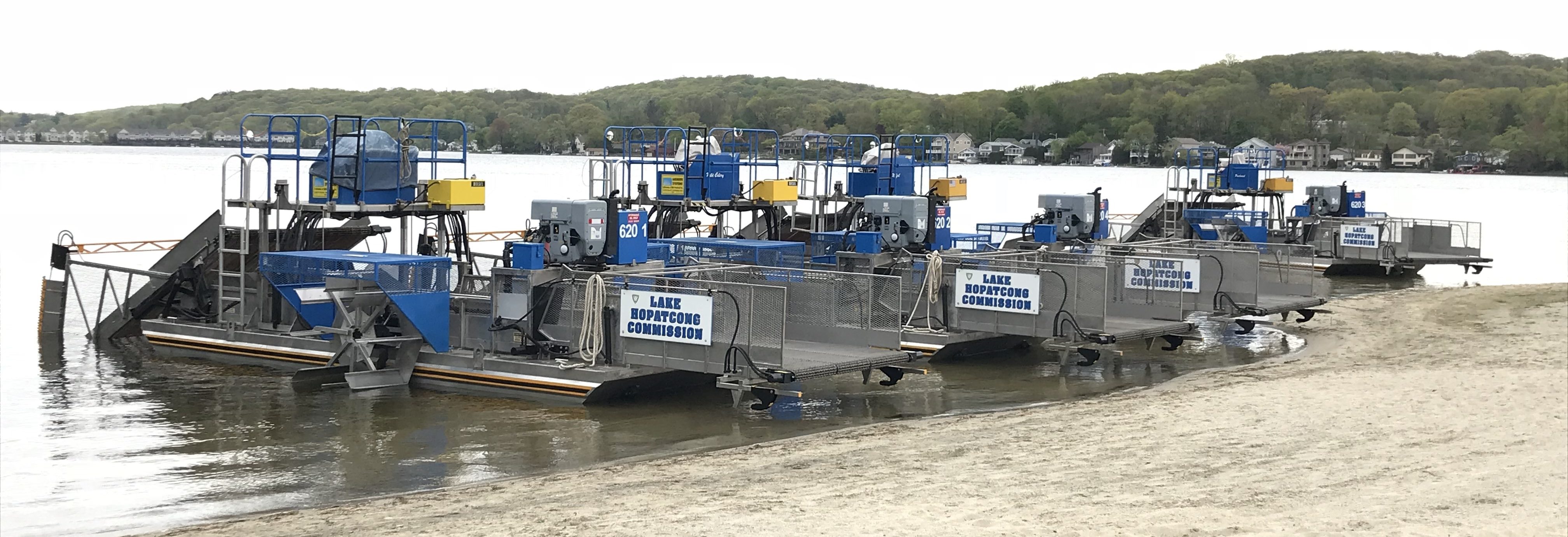
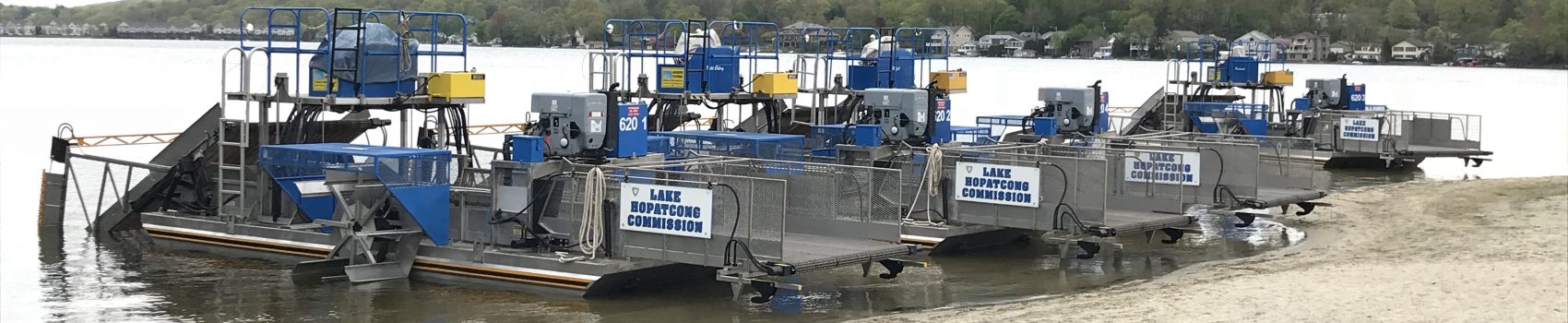
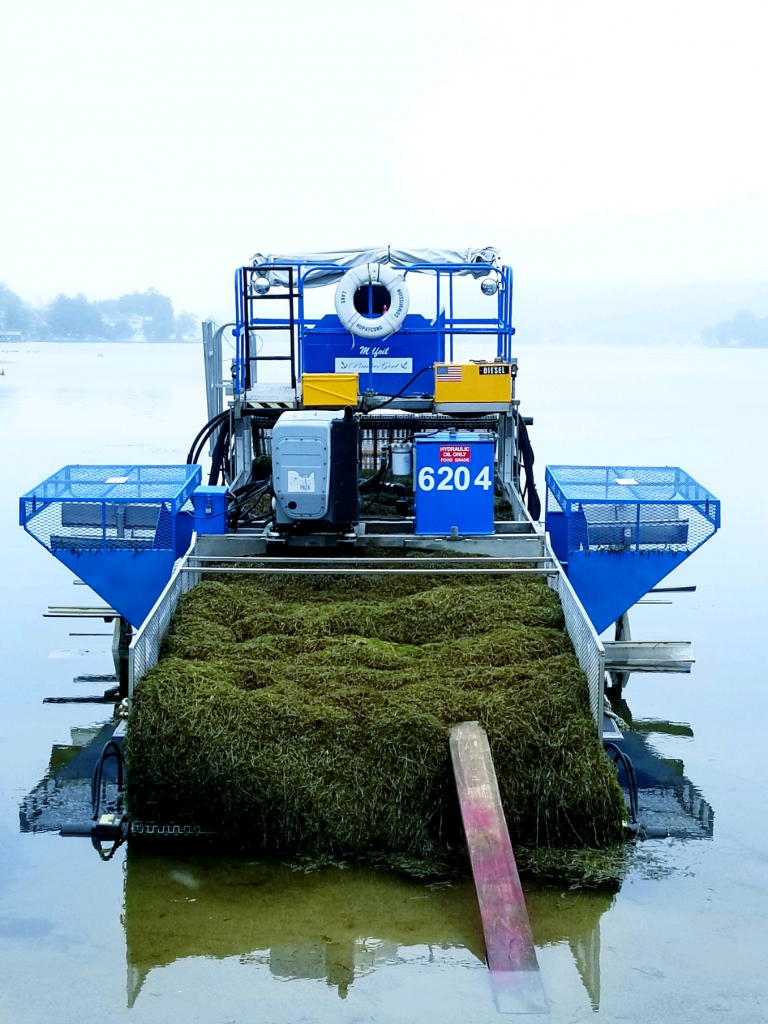
Many shallow areas of Lake Hopatcong are susceptible to dense growths of rooted aquatic plants, commonly referred to as weeds. To manage aquatic vegetation, the Lake Hopatcong Commission implements a weed harvesting program. During harvesting operations, the harvester operator typically begins cutting weeds toward the center of an infested area, generally in deeper water farther from shore, and then works progressively closer to the shoreline as harvesting in that section is completed. Before moving to another area of the lake, the operator will collect any floating vegetation (“floaters”) near the shoreline using the harvester. For safety and to avoid damage to property and equipment, operators do not harvest near rocks, in very shallow water, or adjacent to bulkheads.
When cutting weeds, the harvesters move at less than 5 mph and move considerably slower if the water is choppy or if it is windy. As an example, on a beautiful sunny day with no wind or waves, it takes the harvester approximately 15 minutes just to travel from the Point Pleasant in Hopatcong to the beach at the State Park when the harvester is not cutting weeds. Under the same conditions, if the harvester was cutting one pass from Point Pleasant to the State Park beach, it would take at least 30 minutes to harvest that distance.
The original weed harvesters are still in operation today, making them 22 years old this year. During the off season the field staff maintain and repair the harvesting equipment to keep the machines in good working condition.
Click here to learn more about the benefits of weed harvesting.
Are you interested in identifying the types of native and invasive aquatic plants found in Lake Hopatcong or to learn about notorious invasive species currently not found in the lake? If so, the Identification Manual of Aquatic Plants in Lake Hopatcong and Potential Future Invasive Species is a great learning tool.